
Quick Read
-
Ripple has invested in ZILO and Licuido, adding regulated record-keeping, issuance and collateral tools to the XRP Ledger.
-
ZILO builds the software that keeps a fund's record of who owns which shares, and State Street and Fidelity International already run on it.
-
Licuido targets $10 trillion in money market fund liquidity by letting institutions pledge fund shares as repo collateral instead of selling them.
-
Neither investment drives XRP demand, as fund trades settle in RLUSD stablecoin while XRP only covers a 0.00001 XRP network fee.
-
Two retirees, same $1 million, same 4% rule, buy one finished with $1.4 million, the other hit $0 in 12 years. Our free reader guide explains the flaw that separated them, and the income-first method built to avoid it.
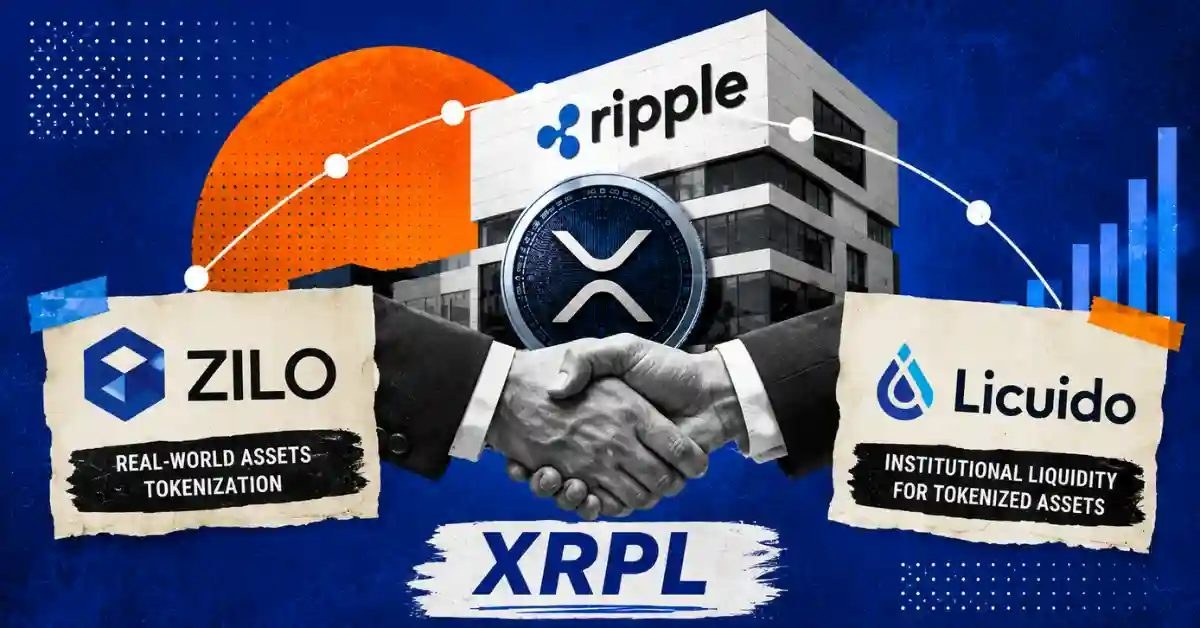
Ripple announced strategic investments in two British companies on August 3, adding regulated record-keeping, issuance, and collateral tools to the XRP Ledger. ZILO makes the software that keeps a fund's official record of who owns which shares, and Licuido runs a regulated platform that lets institutions pledge those shares as collateral instead of selling them.
Both companies already worked with Ripple, and both helped build the Aviva Investors fund that went live on the XRP Ledger last week. XRP (CRYPTO:XRP) trades at $1.07 today, down 42% this year, so what do these deals mean for the coin?
What ZILO Brings to Ripple's XRPL Infrastructure
ZILO keeps the record of who owns which shares in a fund. That job is called transfer agency, and it covers the share register, the buying and selling, investor servicing, and corporate actions. The London company builds cloud software that does all of it, and its platform handles tokenized share classes as funds move onto blockchains.
The 4% Rule is Broken, Built On A World That No Longer Exists
Every retiree knows about the 4% rule, but it frames retirement as a slow liquidation and still causes retirees with seven-figure accounts to agonize over a dinner out.
There's a different way to run the math that makes more sense today. Build an income floor — dividends, interest, and Social Security that cover your essential bills every month — and you never have to sell shares into a down market just to pay them.
Our free reader guide, The 4% Rule Is Broken, walks through it in about 15 minutes. Access the report here.
Some of the biggest names in finance already run on that software. State Street picked ZILO in March 2025 to power its return to the UK transfer agency market, and Fidelity International had adopted the platform for its private assets business a year before that. Both firms also put money into the company, joining a £25 million Series A in January 2024 that Fidelity International Strategic Ventures and Portage co-led, with Citi taking part as well.
What Ripple gets is a record institutions can trust. Banks and asset managers will not lend against a fund or accept it as collateral unless the ownership register is accurate and holds up with regulators, so the tokenized fund needs that record before anything can be built on top of it.
Goffin, who founded ZILO in April 2020 after starting Calastone, said asset managers moving fund structures onchain "need infrastructure that can handle tokenized share classes without adding operational risk," and that Ripple's investment lets ZILO speed that work up.
What Licuido Adds to the XRP Ledger
An institution that holds a money market fund and suddenly needs cash has one option today, which is to sell the fund. Licuido is built to remove that choice by letting the institution pledge the fund as collateral instead, so it can borrow short-term cash against the shares without liquidating anything.
That choice becomes a problem when markets crash and margin calls arrive. Institutions sell their money market funds to raise the cash, those funds then sell their own holdings to pay them out, and the extra selling pushes prices down even more. An institution that pledges its fund instead of selling it avoids adding to that, which is why Licuido is aiming the model at the repo market, where institutions borrow cash against assets they already own.
The company handles issuance, distribution, and execution for traditional assets including fund shares, and it uses the XRP Ledger's Multi-Purpose Token standard, where each token represents one-for-one legal ownership of the fund. Tokenized funds can be pledged as soon as they are issued, and Licuido says it is targeting more than $10 trillion of money market fund liquidity with the model.
Ripple describes Licuido as an FCA-regulated trading platform. Licuido Markets Limited operates as an appointed representative of Sapeno Partners LLP, which is authorised and regulated by the FCA.
How the Investments Build on Ripple's Aviva Fund
Aviva Investors launched a tokenized share class of its US Dollar Liquidity Fund on the XRP Ledger on July 29, which is five days before Ripple announced these investments. The Central Bank of Ireland approved the structure, making it the first tokenized fund the regulator has cleared on a public blockchain.
Aviva's US Dollar Liquidity Fund has been running since 2020 as an Ireland-domiciled money market fund holding high-grade, short-term dollar debt. And the tokenized share class carries the same investment objective, risk profile and regulatory protections as the conventional one.
The assets themselves never moved onto the blockchain. BNY Mellon still holds the underlying portfolio, so the fund carries on inside its existing regulated framework while tokens on the XRP Ledger represent who owns the shares. Komainu provides regulated custody for the tokens, and Licuido supplied the tokenization infrastructure behind them.
Ripple defined the token standard for the work and built the issuance, distribution and custody around it with ZILO and Licuido. So the two companies Ripple has now invested in were already the ones making its flagship fund launch work.
What the Investments Mean for XRP
Neither investment creates demand for XRP. Ripple's announcement names its RLUSD stablecoin as the regulated cash leg for delivery-versus-payment transactions, which means the money moving through these tokenized fund trades is a dollar stablecoin. Licuido plans to settle in traditional fiat first and then in digital assets such as RLUSD, so XRP is not part of its settlement either.
XRP only carries the network fee on every transaction, currently 0.00001 XRP, along with the reserve each account on the ledger has to hold. Even that could shrink this month, since the XRPL v3.3.0 upgrade expected in August includes an amendment called Sponsored Fees and Reserves that would let institutions cover both for their users.
Ripple is building a serious business on the XRP Ledger, and these two investments make it stronger. But until a fund trade settles in XRP rather than RLUSD, the ledger can keep growing without the XRP price following it.
Before Your Next Withdrawal, Run One Number ( It's Not The 4% Rule Everyone Knows)
Take your essential monthly expenses and subtract your guaranteed income — Social Security, plus any pension. What's left is your income gap, and how you close it determines whether retirement runs on share sales or on a paycheck your portfolio writes you every month. Our free reader guide, The 4% Rule Is Broken, shows exactly how to close that gap with portfolio income: a worked example (one retiree needed about $480,000 in income-producing assets to cover his essentials for good), an eight-point conversion checklist, and the 20-year numbers comparing dividends to withdrawals. It's free and takes about 15 minutes to read. Get the guide here before you take your next withdrawal.
Contact [email protected] for any questions or corrections.