
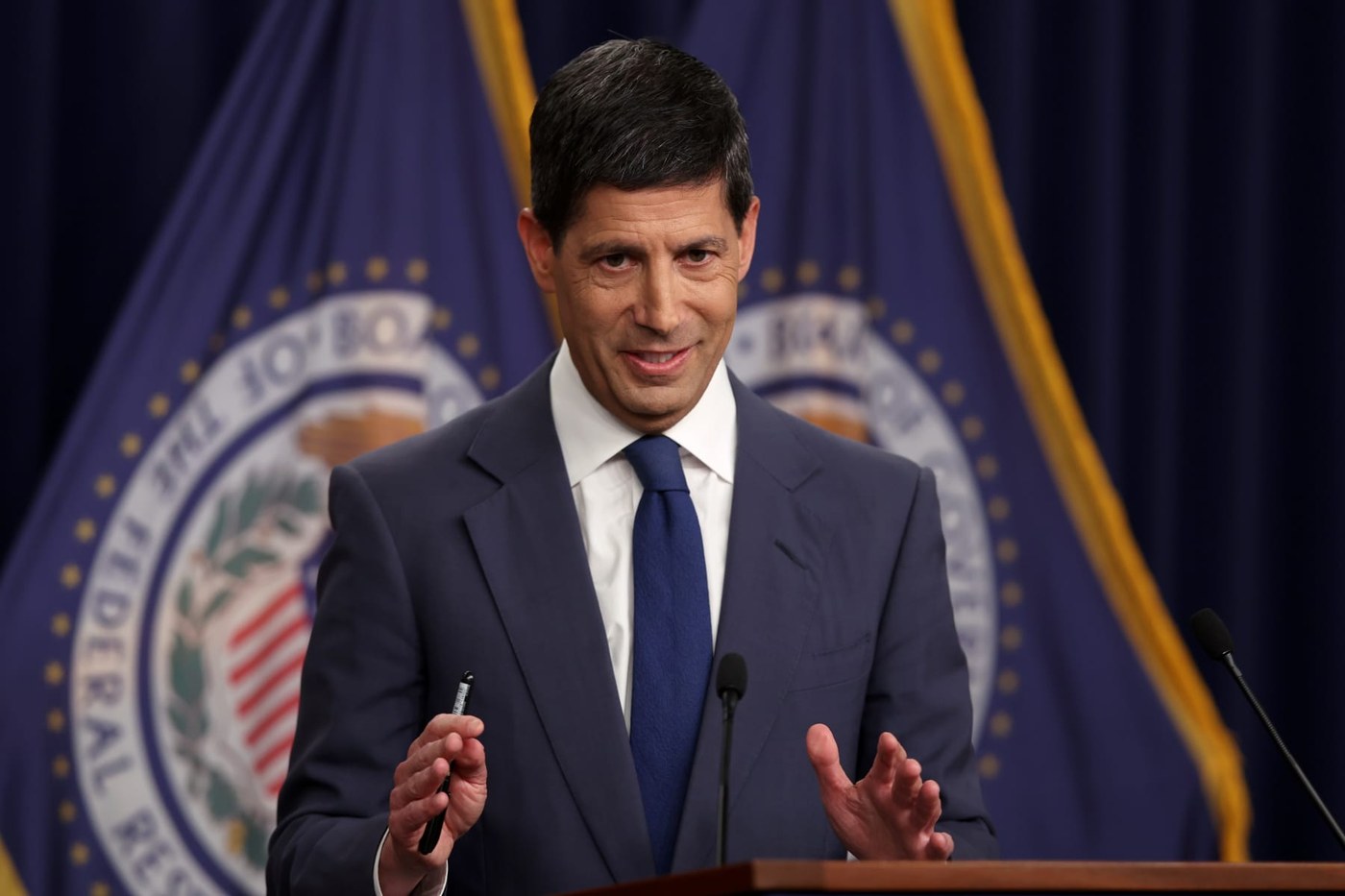
The Federal Reserve's cryptic chairman is set to deliver his much-awaited keynote address Friday in Jackson Hole, with markets trying to anticipate what, if anything, he will have to say on key matters affecting the economy and monetary policy.
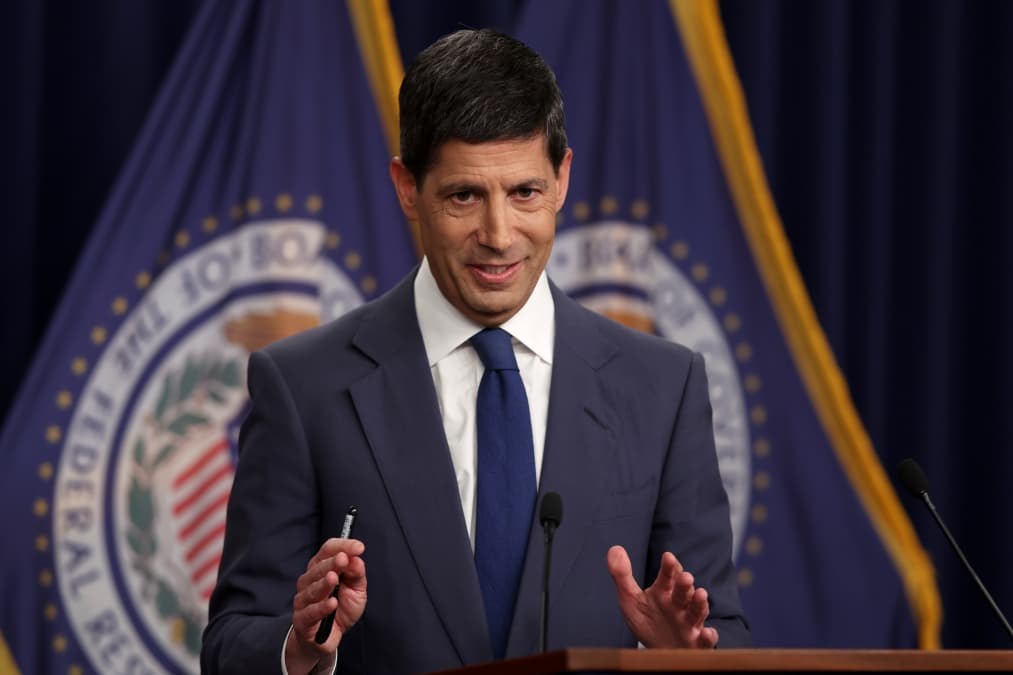
Kevin Warsh will speak during the Fed's annual symposium in Wyoming, an event this year that is titled "Financial Innovation: Implications for Payments and Policy."
Prior Fed chairs have used the speech as an opportunity to discuss broad policy frameworks and intentions on where they see policy and interest rates headed, beyond the main focus of the conference.
But given his approach so far since taking the reins in May, a time during which Warsh has placed a far greater emphasis on market direction than cues from the Fed, it's hard to know what to expect.
"People keep asking me what I'm expecting, and I'm not really expecting much of anything. I think it's hard to predict what he's going to say," said Luke Tilley, chief economist at M&T Bank and Wilmington Trust Investment Advisors. "If I had to guess, I would say that he's going to give a very high-level, broad look at the work of the task forces and how he thinks the Fed should operate, as opposed to a nuts-and-bolts assessment of the economy and expectations for policy."
Warsh has set up five task forces aimed at taking what he calls a "first principles" look at Fed functions.
Among their tasks are an assessment of how policymakers view inflation, the balance sheet, the data points that influence decisions, communication strategies and communications.
On the final point, Warsh has taken a unique approach compared to his recent predecessors: Rather than seeking to steer reaction through carefully placed signals, he has preferred a more hands-off approach that lets markets interpret data and send signals to the Fed.
It's a strategy that has met with mixed reviews so far and could generate adverse reaction.
Looking for more information
"I would appreciate some more detail on how he personally thinks inflation happens, or how he personally thinks monetary policy affects inflation, either in timing or through which channels," Tilley said. "That doesn't even have to address the reaction function. It's just the basic plumbing of financial markets and monetary policy, because there are a lot of channels."
With rising Treasury yields heavily in focus, that makes the stakes particularly high for Friday's speech.
"We have the most unusual Jackson Hole monetary symposium in recent memory on deck because of Warsh's unforced errors early in his tenure," said Joseph Brusuelas, chief economist at RSM. "The market has now bid this up to be something that I think the Federal Reserve would rather it not be."
There's more at stake, though, than market reaction.
Coinciding with the rise in yields, Treasury Secretary Scott Bessent announced an initiative last week in which the department will double the size of its buybacks on off-the-run, or already issued, debt offerings. Treasury usually buys back $2 billion per weekly operation, but will "at least" double that when the next round begins Sept. 9.
While that's a relatively small chunk of the massive U.S. debt load, the move still sets up a possibly uncomfortable scenario for Warsh. Market interventions from fiscal and monetary authorities seem to contradict Warsh's stated intentions so far.
"We're in a unique set of conditions here, where actions by the Treasury have undermined Warsh's move. Therefore, the Fed chair is in between a rock and a hard place," Brusuelas said.
Market impacts
One common complaint about Warsh thus far is his reluctance not only to provide so-called forward guidance on where he thinks the Fed is headed but also neglecting to delineate the "reaction function," or the conditions that would warrant a move in either direction.
Failing to do so again could have significant market consequences, said Mark Cabana, head of U.S. rates strategy at Bank of America.
"In short, we expect Warsh to signal that he is prepared to raise rates again if inflation does not continue to moderate," Cabana said in a client note earlier this week. "By contrast, if he uses the speech to focus solely on broader structural themes such as productivity or demographics, we worry markets could interpret the message as dovish."
In such a case, Cabana said he would expect a sell-off in long-dated Treasurys that could send the 30-year yield to 5.5% or higher, which would be more than 0.3 percentage point from the current level to highs not seen since at least the early part of the 21st century.
Specificity, then, could be Warsh's friend as he prepares to deliver the most important remarks of his tenure so far.
"Warsh is not going to be able to engage in cryptic discourse," Brusuelas said. "He's going to need to be a little bit more forthright and clear on what he means."