
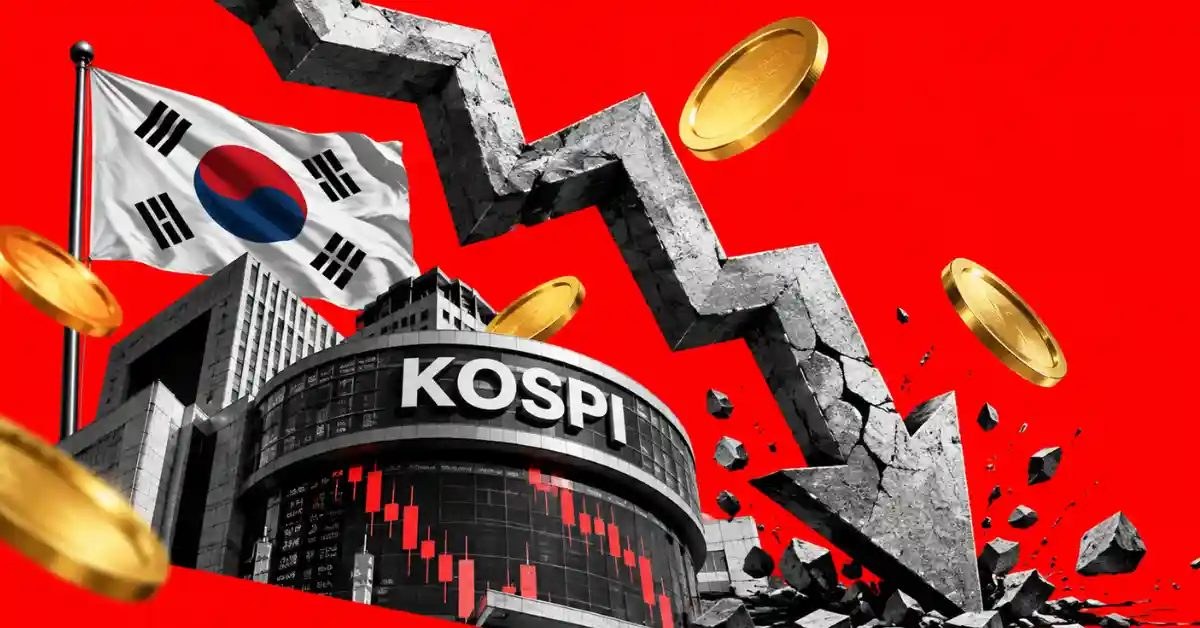
South Korea’s benchmark KOSPI plunged 5% on Monday, prompting the Korea Exchange to halt program selling for five minutes, as emergency government steps failed to stop the slide. The drop pushed the index to its lowest level in about 10 months and wiped out roughly ₩316 trillion in market value. The KOSPI is now close to erasing all its gains for the year. The selloff deepened a slump that began last week, when the index closed Friday at 4,869.96, its first finish below 4,900 in around 10 months. Authorities held an emergency meeting on Sunday and said they are ready to deploy the market stabilisation fund immediately if needed. They also eased share buyback rules for three months. Foreign investors have been heavy sellers, offloading more than ₩222 trillion, or about $166 billion, in KOSPI shares this year. Goldman Sachs has cut its KOSPI target twice in roughly three weeks, from 12,000 to 9,000 and then to 7,500, as the global AI and chip selloff hits Korea’s tech-heavy market.
Was this writing helpful?
Trust with CoinPedia:
CoinPedia has been delivering accurate and timely cryptocurrency and blockchain updates since 2017. All content is created by our expert panel of analysts and journalists, following strict Editorial Guidelines based on E-E-A-T (Experience, Expertise, Authoritativeness, Trustworthiness). Every article is fact-checked against reputable sources to ensure accuracy, transparency, and reliability. Our review policy guarantees unbiased evaluations when recommending exchanges, platforms, or tools. We strive to provide timely updates about everything crypto & blockchain, right from startups to industry majors.
Investment Disclaimer:
All opinions and insights shared represent the author's own views on current market conditions. Please do your own research before making investment decisions. Neither the writer nor the publication assumes responsibility for your financial choices.
Sponsored and Advertisements:
Sponsored content and affiliate links may appear on our site. Advertisements are marked clearly, and our editorial content remains entirely independent from our ad partners.